Why Your Dog's Shedding Might Signal More Than Just a Bad Coat
Dog Shedding is easy to dismiss as a cosmetic nuisance, especially when fur starts appearing on the sofa, clothes, and floor. But the important question is not simply how much hair is coming out. It is what the skin and coat look like underneath, whether the dog is itchy or uncomfortable, whether new hair is growing normally, and whether other changes in health appeared at the same time.
Dogs naturally replace old hairs with new ones, and some dogs shed far more visibly than others. Merck Veterinary Manual notes that shedding without bald patches or a recognizable pattern of hair loss is often part of normal coat replacement. The picture changes when shedding becomes unusually heavy and is accompanied by bald areas, symmetric thinning, scaling, redness, odor, itching, skin thickening, or delayed regrowth. In those cases, the loose hair may be a visible consequence of a problem rather than the problem itself.
Start With the Pattern, Not the Hair on the Floor
A useful first distinction is between shedding and alopecia. Shedding is the release of mature hairs as part of the normal hair-growth cycle. Alopecia means a reduction or absence of hair where hair would normally be present. Those two processes can overlap, but they do not mean the same thing.
Think of the coat as a living tissue rather than a static layer. Hair follicles move through growth, transition, and resting phases. Nutrition, hormones, genetics, illness, and environmental influences can all affect that cycle. A dog can therefore leave a large amount of fur behind while still having a healthy-looking coat, while another dog can lose comparatively little hair but develop a clearly abnormal bald patch.
A practical rule is simple:
- If loose hair increases but the coat remains evenly covered, the skin looks normal, the dog is comfortable, and new growth keeps pace, ordinary coat replacement is more likely.
- If loose hair is accompanied by visible thinning, bald spots, broken hairs, persistent scratching, licking, redness, scale, odor, darkened skin, or slow regrowth, investigate the cause rather than treating the shedding itself.
- If shedding appears alongside changes such as unusual thirst, frequent urination, increased hunger, weight change, lethargy, exercise intolerance, or recurrent skin infections, a general veterinary assessment becomes more important.
This distinction matters because brushing, bathing, or adding a supplement may change what is visible without addressing why the coat changed in the first place.
Why Non-Seasonal Shedding Deserves More Attention
Seasonal coat turnover is familiar, but persistent or newly excessive shedding outside a dog's usual pattern can have several explanations. Merck identifies infections, parasites, allergies, nutritional deficiencies, hormonal imbalances, trauma, and other diseases among the causes of acquired hair loss. The same dog can also have more than one process at once: an allergic dog may scratch, damage the coat, and then develop a secondary bacterial or yeast infection.
That is why the phrase “my dog is shedding more” is clinically incomplete. A veterinarian will usually want to know when the change began, whether it is getting worse, where the hair is disappearing, whether the dog is itchy, what the skin looks like, what the dog eats, what medications or supplements it receives, and whether there are other changes in appetite, thirst, stool, weight, energy, or behavior.
The shape of the problem can be particularly informative. A few circular or irregular patches suggest a different pathway from evenly distributed thinning over the trunk. Hair loss concentrated around areas the dog repeatedly licks suggests a different mechanism from symmetrical thinning on both sides of the body. The location does not prove a diagnosis, but it helps determine what should be investigated next.
The Main Health Categories Behind Unusual Coat Loss
Allergies Can Look Like Shedding
One of the easiest mistakes is to count the hair instead of examining the behavior that produced it. Cornell University College of Veterinary Medicine identifies excessive itchiness as the most common sign of canine atopic dermatitis. Dogs may scratch, lick their feet, chew at their skin, or rub their faces. Hair can disappear from these areas because of repeated mechanical trauma rather than because the follicles suddenly stopped producing hair.
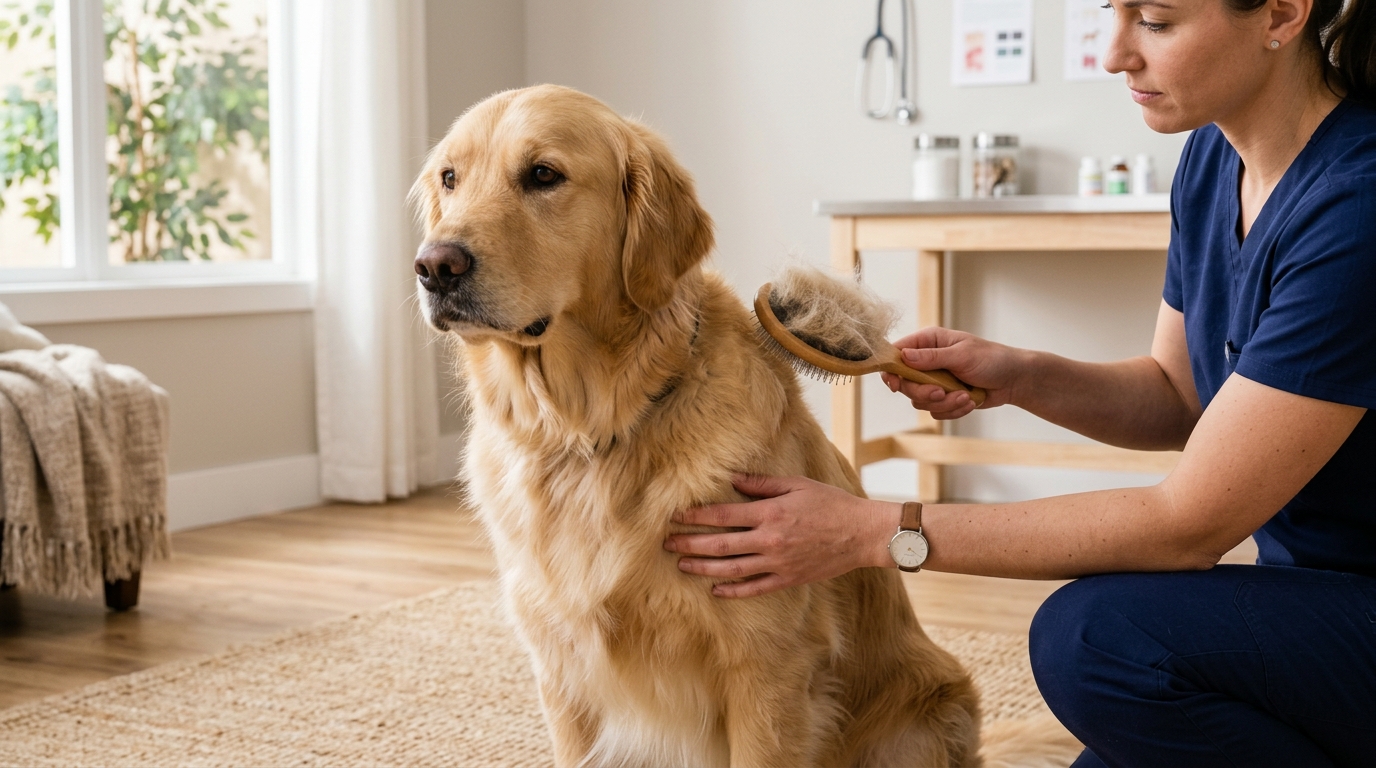
Allergic disease does not have to follow a neat seasonal calendar. Some dogs experience seasonal flares, while others develop year-round signs. A recent evidence review from the International Committee on Allergic Diseases of Animals describes canine atopic dermatitis as multifactorial, involving genetics, environmental influences, and allergic sensitization. House dust mites remain an important allergen group, while pollens, molds, and other exposures may matter in individual dogs.
This creates a useful decision point. If the coat change is paired with persistent itching, focus first on the skin problem and its potential triggers. If there is little or no itching but there is progressive, symmetric thinning, the diagnostic emphasis may shift toward hormonal or other non-inflammatory causes. Neither pattern is a diagnosis by itself, but the difference can prevent months of treating the wrong symptom.
Parasites and Infections: The Causes You Can Miss at Home
Fleas can be particularly deceptive. A dog does not need to have an obvious carpet of fleas for flea allergy dermatitis to be relevant. Cornell notes that patterns can include hairlessness or itching around the back near the tail and the backs of the thighs, and adult fleas are not always immediately visible.
Demodex mites are another example. The Companion Animal Parasite Council explains that overgrowth can cause patchy hair loss or dermatitis. Localized disease can occur in young dogs and may resolve without treatment, while generalized demodicosis is more serious and can be associated with an underlying systemic disease or immune defect.
Fungal and bacterial skin disease can also change the coat. A dog may develop broken hairs, crusting, scale, redness, odor, pustules, or areas of inflammation. These signs are not interchangeable with ordinary shedding. They can also require testing because several skin disorders look similar from a distance.
That is one reason home diagnosis based solely on photographs or the amount of hair in a brush is unreliable. Veterinary evaluation may involve a detailed skin examination, flea and mite assessment, skin scrapings, cytology, fungal testing, or other tests depending on the pattern.
Hormonal Disorders Often Have a Different Visual Signature
Endocrine disease is important because it can affect the hair-growth cycle without producing the dramatic itching many owners associate with skin disease.
Hypothyroidism is one example. Merck Veterinary Manual describes dry skin, excessive shedding, delayed hair regrowth, and usually symmetric hair thinning or hair loss among its dermatologic signs. Dogs may also show broader changes such as lethargy, reduced willingness to exercise, weight gain, or difficulty staying warm. The combination is more meaningful than any single sign.
Cushing syndrome, or hyperadrenocorticism, produces another recognizable cluster. Dogs may develop increased thirst and urination, increased appetite, panting, abdominal enlargement, muscle wasting, thin skin, alopecia, and secondary skin infections. Hair loss alone does not establish Cushing syndrome, but hair loss accompanied by several of these systemic changes deserves professional evaluation.
The practical exception is important: not every symmetrical thinning pattern is an endocrine disorder, and not every dog with increased shedding needs a hormone panel. Veterinary diagnosis is based on the complete history, physical examination, and appropriate laboratory testing rather than on coat appearance alone.
Nutrition Matters, But “More Supplements” Is Not the Same as Better Nutrition
Hair is metabolically active tissue, so inadequate nutrition can affect its production and quality. Merck identifies nutritional deficiencies, particularly protein deficiency, as possible causes of slowed hair growth. Nutritional dermatoses can also involve deficiencies or imbalances involving fats, minerals, vitamins, and trace elements.
But this fact is frequently overextended online. A dog that sheds heavily does not automatically have a zinc, biotin, omega-3, vitamin, or protein deficiency. The more useful question is whether the dog's overall nutritional intake is appropriate for its life stage, body condition, health status, and feeding pattern.
The American Animal Hospital Association recommends a systematic nutritional assessment that considers the dog, the diet, feeding management, environment, activity, body condition, and muscle condition. The assessment should include treats, table foods, supplements, and foods used to administer medication. This matters because a well-formulated complete diet and a diet assembled from multiple extras can have very different nutritional profiles.
For a dog eating a nutritionally adequate diet with a healthy body condition, randomly adding several supplements may add complexity without solving the cause of shedding. It can also make the total diet harder to evaluate. If a deficiency or therapeutic need is suspected, the more defensible approach is to identify the nutritional gap first and then decide whether dietary adjustment or a targeted supplement is appropriate.
Omega-3 fatty acids are often discussed in the context of skin and coat health, but they should be treated as one nutritional tool rather than a universal shedding cure. A digestive probiotic may have a legitimate role in a particular gastrointestinal or dietary-management context, but there is no sound reason to assume that every shedding problem is caused by an unhealthy gut. The same principle applies to organic vitamins and mineral blends: nutritional support should follow a defined need, not replace diagnosis.
Environmental Factors Can Keep a Skin Problem Going
A dog's environment can influence the skin without being the sole cause of hair loss. Allergens, humidity, household dust, parasites, grooming products, topical chemicals, and repeated friction can all become relevant depending on the individual dog.
Recent veterinary literature continues to describe canine atopic dermatitis as a disease influenced by both environmental and genetic factors, while emphasizing that many environmental associations remain complex and incompletely understood. That limitation matters. It is tempting to blame a single detergent, air freshener, carpet, or food immediately after a flare, but temporal association is not proof of causation.
Still, some low-risk observations are useful. Note whether the problem changes after moving between environments, after bathing, after a new topical product, or during periods of increased outdoor exposure. Keep bedding clean, avoid unnecessary fragranced products when the skin is reactive, and prevent poorly fitted collars or harnesses from rubbing the same area repeatedly.
These steps are supportive rather than diagnostic. If the dog is already developing lesions, persistent itch, or true alopecia, environmental housekeeping should not become a substitute for veterinary assessment.
What to Do When Shedding Suddenly Changes
The most useful first action is to document the change rather than immediately changing everything. Take clear photographs of the coat and skin from the same angles every few days. Record appetite, water intake, stool quality, energy, scratching, licking, bathing, new products, diet changes, medications, supplements, and parasite prevention. This creates a timeline that can be much more informative than a memory of how much hair was on the floor last month.
A Practical Shedding Check
- ☐ Compare today's coat with photographs from a normal period rather than relying only on the amount of loose hair collected.
- ☐ Look for bald spots, symmetric thinning, broken hairs, scale, redness, crusting, darkened skin, odor, or delayed regrowth.
- ☐ Watch for scratching, licking, chewing, face rubbing, foot chewing, or other signs of itch.
- ☐ Check whether appetite, thirst, urination, energy, weight, exercise tolerance, or behavior changed at the same time.
- ☐ Review the complete diet, including treats, table foods, supplements, and foods used with medication.
- ☐ Note recent changes in shampoos, topical products, detergents, bedding, grooming, travel, outdoor exposure, or household conditions.
- ☐ Keep routine parasite prevention current and discuss gaps with a veterinarian rather than judging parasite risk from visible fleas alone.
- ☐ Brush gently and consistently so loose coat can be observed without creating additional skin trauma.
- ☐ If the change is persistent, progressive, or accompanied by skin or systemic signs, arrange a veterinary examination instead of stacking new supplements.
When the Right Next Step Is an Examination, Not a New Product
A useful decision rule is to match the response to the evidence. If the dog is comfortable, the skin looks healthy, the coat remains evenly covered, and the change resembles the dog's established shedding cycle, routine grooming and observation may be reasonable. If there is visible alopecia, itch, inflammation, recurrent infection, or systemic change, move from grooming management to medical investigation.
If the diet is incomplete, unusually restrictive, poorly documented, or associated with weight or muscle-condition concerns, nutrition deserves a closer review. If the dog already eats an appropriate complete diet and the coat suddenly changes, do not assume that adding several vitamins will reveal the answer. A nutritional supplement can be useful when it addresses a specific, justified need; it is much less useful as a diagnostic substitute.
If environmental changes coincide with itching, look for patterns while remembering that allergies are multifactorial. If the problem is localized to one contact area, friction or local irritation becomes more plausible. If it is symmetric and non-itchy, endocrine and other non-inflammatory causes deserve consideration. If it is patchy and inflamed, infectious or parasitic causes move higher on the list.
This logic also explains an important limitation: the same visible outcome can have different causes. Two dogs can shed heavily, yet one may simply be changing its coat while the other has hypothyroidism, allergic dermatitis, parasites, or a nutritional problem. There is no responsible “one-size-fits-all” shedding solution.
FAQ: Dog Shedding That Does Not Fit the Usual Pattern
Is heavy shedding always a sign that my dog is sick?
No. Some dogs naturally release large amounts of hair, and normal coat replacement can look dramatic. The concern rises when shedding produces bald patches, obvious thinning, delayed regrowth, skin abnormalities, significant itching, or other changes in health. The condition of the skin and the pattern of hair loss are more informative than the quantity of fur alone.
Can allergies cause a dog to shed more?
Yes, but often indirectly. Allergic dogs may scratch, lick, chew, or rub their skin, causing hairs to break or be pulled out. Atopic dermatitis can be seasonal or year-round, and secondary infections can further damage the skin and coat.
Could hypothyroidism cause excessive shedding?
It can. Hypothyroidism is associated with dry skin, excessive shedding, delayed hair regrowth, and often symmetric hair thinning or hair loss. Other signs such as lethargy and weight gain can make the overall pattern more suspicious, but laboratory testing is needed for diagnosis.
Does a dog with shedding need a vitamin supplement?
Not automatically. Nutritional deficiencies can affect hair growth, but increased shedding alone does not identify a deficiency. A complete nutritional history should come first. If a deficiency or specific therapeutic need is identified, a veterinarian can determine whether changing the diet or adding targeted nutritional support makes sense.
Can fleas cause hair loss even when I cannot see fleas?
Yes. Flea allergy can produce itching and hairlessness, particularly around the back near the tail and the rear thighs, and adult fleas are not always obvious. A consistent parasite-control plan and veterinary assessment are more reliable than visual inspection alone.
What does symmetrical hair loss suggest?
Symmetry can be a clue toward non-inflammatory or endocrine-related hair loss, especially when itching is minimal. It is not diagnostic by itself. The dog's age, other clinical signs, medications, skin condition, and examination findings determine what testing is appropriate.
Can stress cause a dog to shed?
Stress can influence skin and coat biology, but it should not automatically be used as the explanation for unexplained alopecia. Persistent or marked hair loss still deserves consideration of parasites, allergies, infection, endocrine disease, nutrition, and other medical causes before attributing it to stress.
Should I change my dog's food when shedding suddenly increases?
A sudden food change is not necessarily the best first move. If the current diet is nutritionally appropriate, changing foods can make the timeline harder to interpret and may introduce another variable. Review the existing diet and the complete health picture first, especially if skin lesions or systemic signs are present.
The Bigger Picture: Shedding Is a Clue, Not a Diagnosis
The most useful way to think about unusual Dog Shedding is as a signal that needs context. Normal coat replacement can be messy without being unhealthy. By contrast, hair loss accompanied by itching, bald patches, inflammation, delayed regrowth, symmetric thinning, recurrent infections, or systemic changes deserves a different level of attention.
The evidence points toward a broad set of possible explanations: parasites and infections can damage follicles or provoke self-trauma; allergies can drive persistent itching; endocrine disorders can alter follicle cycling; inadequate or imbalanced nutrition can impair hair production; and environmental exposures can aggravate susceptible skin. These pathways can overlap, which is why a visible pile of fur cannot identify the cause by itself.
The practical takeaway is equally broad but more useful than a single “shedding remedy.” Watch the pattern, inspect the skin, record accompanying changes, review the complete diet, and use veterinary testing when the signs stop looking like ordinary coat turnover. If nutrition genuinely needs support, targeted nutritional intervention—including an appropriate supplement when justified—can be part of the solution. But when the coat is warning you about an underlying disease, finding and treating that disease is what ultimately changes the shedding pattern.


Comments
Post a Comment