What Your Companion's Persistent Tear Marks Could Indicate: A Threshold for Veterinary Insight
Persistent tear marks can look like a minor grooming problem, especially when a dog or cat has a pale coat and reddish-brown streaks beneath the eyes. Yet the color on the fur does not tell the whole story. The important question is whether the staining is simply the visible result of normal tear production or a sign that tears are overflowing because something is irritating the eye or interfering with drainage.
For companion animal owners, that distinction matters more than finding a quick way to lighten the fur. A stain may remain after its original cause has resolved, while a fresh wet streak can be an early clue that an eye needs attention. Recognizing the difference helps you avoid unnecessary products, identify warning signs, and decide when veterinary evaluation should take priority.
- Dry, stable discoloration: May reflect older staining, especially when the skin and eyes appear comfortable.
- Repeated wetness: Suggests ongoing tear overflow that deserves attention to its cause.
- Redness, squinting, cloudiness, pain, or sudden discharge: Warrants prompt veterinary assessment, with urgent care for significant pain or sudden vision changes.
- Supplements and grooming: May have a supporting role in appropriate circumstances, but neither can diagnose or correct every eye problem.
1. Understand What Tear Staining Actually Shows
Tears are essential to eye health. They lubricate the eye's surface, help remove small particles, and contribute to its protective mechanisms. Under normal conditions, tears drain through small openings near the inner corners of the eyelids and pass into the tear drainage system.
When tears repeatedly spill onto the face, the surrounding fur remains damp. Tear pigments and other components can gradually discolor the hair, creating the familiar brown, rust-colored, or reddish streaks associated with tear staining. Microorganisms living in persistently moist fur may also contribute to changes in odor or color.
In dogs and cats with white, cream, or light-colored coats, these changes can be especially noticeable. However, the visibility of the stain is not a reliable measure of the severity of an underlying problem. A dark stain may be cosmetically prominent without indicating an emergency, while a small amount of new discharge accompanied by squinting may be far more concerning.
There is another important distinction: tear staining is an observation, not a diagnosis. It describes what is happening to the fur, but it does not establish why the tears are overflowing. Persistent staining can occur alongside normal eye function, anatomical differences, irritation, inflammation, or impaired drainage. The appropriate response depends on the complete pattern of signs.
2. Recognize When Appearance Is Less Important Than Symptoms
Owners naturally notice changes in their companion's appearance. A rusty streak may be the first visible sign of a recurring issue, but the most useful clues are often subtle changes in behavior, discharge, or the skin beneath the eye.
Consider the difference between old discoloration and ongoing tearing. Fur that has already absorbed pigment can remain stained even after the eyes are no longer excessively wet. Conversely, fur that repeatedly becomes damp after cleaning suggests that tear overflow is continuing.
Watch how your pet behaves as well. Dogs and cats may blink more frequently, rub their faces against furniture, paw at an eye, or avoid having their heads touched when discomfort is present. Some animals show very little obvious distress even when an eye problem exists, so apparently normal behavior should not override visible warning signs.
Look at both eyes in good, indirect lighting without forcing the eyelids open. Note whether the discharge is clear, mucus-like, thick, or bloody; whether one or both eyes are affected; and whether the surrounding skin appears irritated. Avoid touching the eye itself or trying to remove debris from beneath an eyelid.
A single photograph can be useful, but a sequence of photographs taken under similar lighting is more informative. Comparing images from different days can reveal whether staining is spreading, wetness is recurring, or swelling is developing. This simple record also gives your veterinarian a clearer account of changes that may not be visible during a short appointment.
3. Explore the Common Reasons for Persistent Tear Marks
Facial anatomy and normal variation
Some dogs have facial structures that make tear overflow more likely. Short-muzzled breeds and animals with shallow eye sockets, prominent eyes, or particular eyelid conformations may be predisposed to drainage or eyelid-related problems. Individual variation also occurs in cats.
Anatomy can explain a recurring pattern, but it should not automatically be assumed to explain every new symptom. A pet with a history of mild bilateral staining can still develop an unrelated eye condition. New redness, discomfort, or a sudden increase in tearing deserves a fresh assessment.
Blocked or poorly functioning tear drainage
Tears can overflow when their normal drainage pathway is narrowed, obstructed, or functioning poorly. Inflammation, debris, anatomical differences, or other changes may contribute. Persistent wetness around the inner corner of the eye can be a clue, although the location of the stain alone cannot confirm a blockage.
A veterinarian may examine the drainage openings and, when appropriate, use a controlled flushing procedure or another diagnostic test to investigate the tear pathway. Do not attempt to flush the eye or insert tools into a drainage opening at home.
Environmental irritation
Dust, smoke, airborne particles, strong fragrances, and other environmental irritants may contribute to tearing. Seasonal patterns can provide useful context, particularly when signs appear during specific activities or conditions.
However, not every case of watery eyes is an allergy. Eye irritation can have several causes, and some conditions that initially resemble a mild environmental reaction require treatment. Avoid repeatedly changing products or adding supplements without first considering whether the eye itself needs examination.
Eyelid, eyelash, or surface abnormalities
Eyelashes that rub against the eye, inward- or outward-turning eyelids, abnormal hair growth, and injuries to the corneal surface can cause persistent tearing. These conditions may be particularly uncomfortable because the eye is exposed to repeated mechanical irritation.
Corneal scratches and ulcers are not always obvious to an owner. A veterinarian may use fluorescein dye to identify damage to the corneal surface. When an eye is painful, squinting, or unusually sensitive to light, cosmetic cleaning should not delay evaluation.
Inflammation, infection, or other eye disease
Inflammation involving the conjunctiva, eyelids, or other eye structures may increase discharge and cause redness. Infection can also be involved, but discharge color by itself does not reliably distinguish a bacterial infection from other causes.
Clear tears are not proof that an eye is healthy, and thick or yellowish discharge does not automatically establish which treatment is needed. Examination is important because the correct approach depends on the underlying condition, not simply the appearance of the material on the fur.
Skin changes beneath the eyes
Repeated moisture can irritate the skin, encourage inflammation, and create conditions that favor microbial overgrowth. Signs may include persistent redness, odor, crusting, or sensitivity when the face is touched.
Once the skin becomes inflamed, the problem can become more complicated than staining alone. Keeping the area gently clean and dry may help limit additional irritation, but persistent skin changes need veterinary guidance rather than stronger household cleaners or unprescribed topical treatments.
4. Compare Typical Staining With Signs That Need Attention
The following comparison is designed to help you choose a sensible next step. It cannot replace an examination, and the categories are not absolute: a pet may have more than one issue at the same time.
The most useful distinction is between a stable appearance and an active change. Old pigment may take time to grow out with the hair. Continuing wetness, discomfort, or newly abnormal discharge indicates that the problem should be evaluated on its own merits.
5. Know When Veterinary Insight Should Come First
Not every tear stain requires an emergency appointment, but some accompanying signs make waiting inappropriate. The safest approach is to assess urgency before considering grooming routines, dietary adjustments, or wellness supplements.
Seek urgent veterinary care for severe squinting, an eye held closed, marked swelling, a visibly injured or cloudy eye, blood, sudden changes in vision, or rapidly worsening symptoms. Eye emergencies can progress quickly, and delay may threaten vision.
For new redness, persistent discharge, recurring wetness, or skin irritation without severe pain, contact your veterinarian promptly to determine the appropriate appointment timing. Do not wait for a supplement or stain remover to produce a result before seeking care.
During an examination, the veterinarian may assess eyelid position, eyelashes, the conjunctiva, the cornea, and tear production. Depending on the findings, additional checks may include fluorescein staining, tear testing, pressure measurement, or evaluation of tear drainage.
Not every pet needs every test. The appropriate investigation depends on the symptoms, medical history, physical findings, and the animal's tolerance of the examination. A clear explanation of which possibilities are being investigated can help owners understand why a seemingly small stain sometimes warrants more attention.
When booking an appointment, describe the onset, whether one or both eyes are affected, the character of the discharge, and any recent changes in food, grooming products, environment, or behavior. Mention previous eye conditions and any medications or supplements your pet receives. This information can help the veterinarian identify relevant patterns without assuming that a recent product change is necessarily responsible.
6. What to Do Now: A Practical At-Home Checklist
If your pet is comfortable and there are no urgent warning signs, a simple observation routine can make daily care more consistent. The goal is to reduce unnecessary irritation and document changes, not to diagnose an eye condition at home.
- Check whether the fur is currently wet or only discolored from previous tearing.
- Look for redness, swelling, cloudiness, unusual discharge, frequent blinking, or face rubbing.
- Determine whether one eye or both eyes are affected and whether the pattern is new.
- Take a clear photograph in indirect daylight to document the current appearance.
- If the area is dirty, gently wipe the surrounding fur with a clean, soft cloth dampened with lukewarm water or a veterinarian-approved pet eye-area product.
- Use a separate clean section of cloth for each eye, and avoid touching the eyeball or rubbing the skin.
- Gently pat the surrounding fur dry if your pet tolerates it.
- Remove obvious environmental irritants, such as smoke or strongly scented sprays, without introducing new products near the eyes.
- Record whether wetness returns and whether other symptoms develop.
- Arrange veterinary care if tearing persists, recurs, worsens, or is accompanied by abnormal signs.
Consistency matters more than aggressive cleaning. Scrubbing can irritate delicate skin, and repeatedly removing surface pigment will not correct an underlying drainage or eyelid problem. If cleaning causes discomfort, stop and seek advice.
There is also a limit to what a home routine can accomplish. If the stain is caused by a structural abnormality or an ongoing eye condition, even excellent grooming may not prevent it from returning. In that situation, the meaningful goal is to protect eye health and manage the underlying cause rather than pursue perfectly white fur.
7. Where Ocular Wellness Supplements Fit—and Where They Do Not
Animal ocular wellness supplements often attract attention from owners looking for a proactive way to support their pets' long-term health. Depending on the formulation, these products may contain nutrients or other ingredients intended to support general nutritional needs. Their relevance depends on the individual animal, its diet, health status, and the evidence available for the particular product and intended use.
The crucial distinction is between nutritional support and treatment. A supplement should not be assumed to stop persistent tear marks, unblock tear ducts, correct eyelid abnormalities, heal a corneal injury, or treat an eye infection. Those outcomes depend on causes that nutritional products may not address.
Products marketed for eye wellness may include ingredients such as omega-3 fatty acids, antioxidants, or vitamins. These ingredients are not interchangeable, and the presence of a familiar nutrient on a label does not establish that a product will improve tear overflow or remove staining. Evidence for a particular ingredient in one context also cannot automatically be extended to every pet, formulation, or eye complaint.
Before introducing a supplement, review the complete ingredient list, intended species, serving instructions, and quality-control information. A veterinarian can help determine whether the product addresses a genuine nutritional need and whether it is appropriate alongside existing food, medications, or other supplements.
Why purity and sourcing deserve attention
Owners exploring products through established retailers, including iHerb, Amazon, eBay, or AliExpress, should still evaluate the specific product rather than relying on the retailer's name alone. Availability on a familiar marketplace does not independently prove purity, effectiveness, or suitability for a dog or cat.
Look for clear identification of the manufacturer, intended animal species, ingredient quantities, lot information, expiration date, and appropriate quality-control documentation. Where available, independent testing or a credible certificate of analysis can provide additional information about product identity and contaminants. Such documentation should be relevant to the actual product and batch, not merely a general statement about manufacturing practices.
High-purity formulations and transparent sourcing can be worthwhile considerations when a supplement is appropriate, but they do not establish that the product treats an ocular problem. Likewise, an organic label is not proof of clinical effectiveness, and a product described as natural is not automatically safe for every animal.
When supplementation may be unnecessary
A complete and balanced diet appropriate for your pet's life stage may already provide the nutrients it needs. Adding more is not necessarily better, and excessive intake of certain vitamins or minerals can be harmful. Supplements may also interact with medications or complicate the management of existing conditions.
If your pet eats a nutritionally complete diet and has no identified nutritional need, adding an ocular wellness product solely because of brown fur marks may offer little meaningful benefit. In that situation, the better investment may be a veterinary examination, a careful observation record, or treatment directed at an identified cause.
For owners who are considering a supplement, the decision should follow a clear sequence: identify the health goal, assess the available evidence, confirm suitability with a veterinarian, and then evaluate the product's quality. Do not reverse that sequence by purchasing a product first and assuming the stain reveals a nutritional deficiency.
8. Avoid Common Tear-Stain Treatment Mistakes
The desire to make a pet's face look clean is understandable, but products designed to brighten fur can introduce unnecessary risks when used too close to the eyes. A cosmetic result is not worth compromising the surface of the eye or irritating the surrounding skin.
- Do not use human eye drops without veterinary direction. Different formulations have different purposes, and some products are inappropriate for particular eye conditions.
- Do not use hydrogen peroxide, bleach, alcohol, essential oils, or household cleaners near the eyes. These substances can injure or irritate sensitive tissues.
- Do not give antibiotics or leftover prescription eye medication without guidance. The wrong treatment can be ineffective or harmful, and some medications are unsuitable for particular corneal conditions.
- Do not assume every discharge is an infection. Similar-looking symptoms can have different causes and require different management.
- Do not rely on internet remedies or supplements to manage a painful eye. Prompt assessment is more important than experimenting with products.
- Do not trim hair with sharp scissors close to an uncooperative animal's eye. Ask a qualified groomer or veterinary professional for help when needed.
Be particularly cautious with products that promise rapid stain removal, guaranteed whitening, or a universal solution for every breed. Strong marketing claims do not replace appropriate testing or establish that a product is safe for direct use around the eye.
9. Frequently Asked Questions About Persistent Tear Marks
1. Are persistent tear marks always a sign of illness?
No. Some animals develop stable tear staining because of coat color, facial anatomy, or individual differences in tear overflow. However, persistent wetness or a change in the usual pattern can indicate an underlying issue. Redness, pain, abnormal discharge, or sudden changes require greater attention than the stain's color alone.
2. Why are my dog's tear stains brown or reddish?
The discoloration commonly reflects pigments in tears that accumulate on the hair over time. Moisture and microbial activity around the fur may also influence its appearance. Color alone cannot identify the cause of excessive tearing, so persistent or newly developing staining should be assessed in context.
3. Can cat tear stains be managed at home?
Gentle cleaning of the surrounding fur may help when the cat is comfortable and no warning signs are present. Use a soft, clean cloth and avoid the eyeball itself. Repeated tearing, skin inflammation, squinting, or unusual discharge should prompt veterinary advice. Cats can conceal discomfort, so a calm appearance does not always rule out an eye problem.
4. Do tear-stain supplements work?
There is no sound basis for assuming that every tear-stain supplement will resolve persistent tear marks. A product may provide relevant nutrients in a specific circumstance, but that is different from correcting impaired drainage, an eyelid abnormality, inflammation, or injury. Ask your veterinarian whether a supplement has a meaningful role in your pet's situation.
5. How often should I clean the area around my pet's eyes?
The appropriate frequency depends on how much moisture accumulates and how sensitive the surrounding skin is. Gentle cleaning when needed may help remove surface debris, but frequent rubbing can cause irritation. If the area repeatedly becomes wet or inflamed despite careful cleaning, investigate the cause instead of increasing the cleaning frequency.
6. Can changing my pet's food eliminate tear staining?
Not reliably. A dietary change may be appropriate when a veterinarian identifies a specific nutritional concern or another food-related issue, but tear staining alone does not establish a food allergy or deficiency. Unnecessary diet changes can complicate nutritional management without addressing the actual reason for tearing.
7. Is one stained eye more concerning than two stained eyes?
Neither pattern automatically establishes a diagnosis. However, new tearing affecting only one eye can suggest a localized problem, such as irritation, injury, or a drainage issue. Persistent one-sided symptoms deserve veterinary evaluation, particularly if discomfort, redness, or discharge is present.
8. When should I stop home care and contact a veterinarian?
Stop home treatment and seek urgent care if your pet has severe pain, an eye held closed, sudden cloudiness, a visible injury, blood, or a sudden change in vision. For persistent wetness, recurring discharge, redness, or irritated skin, contact your veterinarian promptly. Do not wait for a cosmetic product or supplement to work before addressing concerning symptoms.
10. A More Useful Goal Than Stain-Free Fur
Persistent tear marks are most informative when they are considered alongside the condition of the eyes, the presence or absence of active moisture, and any changes in your companion's behavior. A stable brown streak on dry fur may call for observation and routine discussion, while recurrent wetness deserves investigation and painful or sudden eye changes require prompt attention.
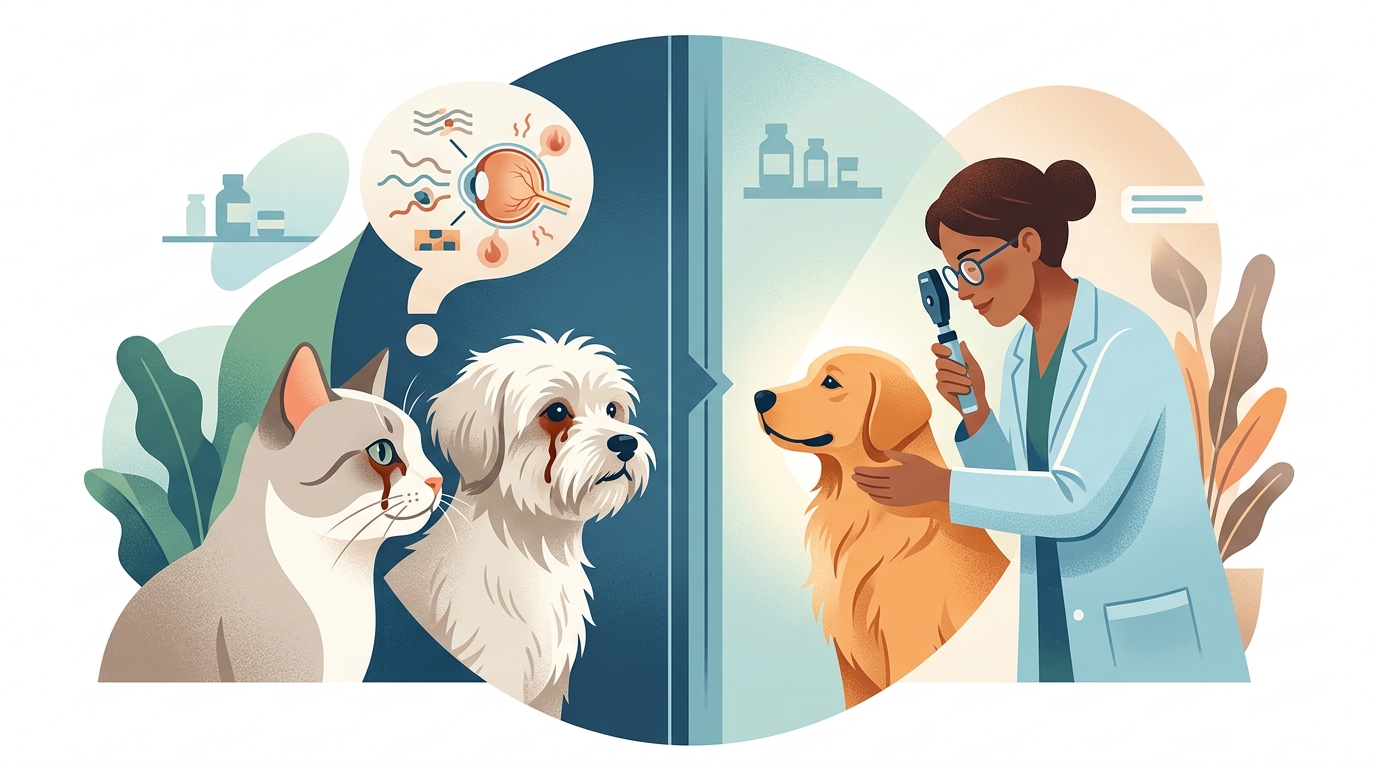
For everyday decisions, keep three priorities in order. First, protect the eye by recognizing warning signs and seeking care when indicated. Second, support comfort with gentle cleaning and sensible environmental management. Third, consider dietary improvements or ocular wellness supplements only when they serve a clearly defined, appropriate purpose.
This order also helps prevent a common mistake: spending time and money on the appearance of the stain while the reason for the tearing remains unaddressed. A high-quality supplement may have a role in a veterinarian-approved wellness plan, but purity, natural ingredients, and premium positioning do not establish a treatment for every eye condition.
Ultimately, the most responsible response to persistent tear marks is neither alarm at every discoloration nor dismissal of every watery eye as cosmetic. It is careful observation, an understanding of what staining can and cannot tell you, and a timely decision to seek veterinary insight when the pattern changes or warning signs appear. Clean fur is a welcome outcome; comfortable, healthy eyes are the priority that guides every decision.


Comments
Post a Comment